Mini Courses

Stratagem Trading offers one or two day courses (4 to 8-hours per day) on specific topics and/or trading strategies from time to time. These courses are designed to address and prepare for anticipated market events (such as the Crash Ready course), or to present in-demand strategies, which maybe of interest to a wider public audience. Topics range from basic to advanced.

June 6, 2026 | 10:00am to 5:00pm CT | 11:00am to 6:00pm ET
June 13 | 9:00am to 1:00pm CT | 10:0am to 2:00pm ET


What is Gamma Scalping?

Gamma Scalping is the aggressive and calculated (not gambling) method of adjusting the deltas of a long premium position as gamma causes the position's delta to change.

Gamma Scalping can be done with stock, futures and/or options. 

Go on a deep dive to learn this very misunderstood strategy that allows the trader to manage, manipulate, exploit, and profit from most option positions. Using an option's delta proclivity to change because of price movement (gamma), professional traders use this change in an option's delta to lock in profits and/or hedge against loss.

IT IS IMPORTANT TO NOTE: An understanding of Gamma Scalping is as important in any long (or short) position, almost at the same level of significance as SKEW. If you needed to understand only two major concepts before trading any strategy it would be SKEW and GAMMA. 

Scott aka JL Lord

Scott
aka J.L. Lord

Scott (aka JL Lord) is a retired floor trader (CBOE) with over 20 years of extensive experience and expertise in leading others in their trading education journey on the subtleties of stock, commodity, currency, index and option trading. 

He rose to prominence as the lead instructor/head trader for option education companies such as TradeSecrets, Optionetics, and Random Walk.  His many accolades and accomplishments include authoring over 15 books, textbooks and course manuals under the nom de plume J.L. Lord.

Conditions you may want to buy a straddle, strangle or volatility.  The ideal time to own premium is when Skew and/or Volatility is very low and you have reason to believe that the underlying will move more than current conditions.

Conditions you may want to buy a straddle, strangle or volatility.  The ideal time to own premium is when Skew and/or Volatility is very low and you have reason to believe that the underlying will move more than current conditions.

Negatives (and positives) of owning premium.  There are 5 greeks associated with an option – delta, gamma, vega, theta and rho.

A. Long Premium - 
Delta – Direction is better with a falling market as volatility may increase.

Gamma – The more movement the better.

Vega – An increase in volatility is beneficial.

- A decrease is detrimental, but hopefully protected by long deltas.

Theta – A huge negative.

Rho – no bearing.


B. -Short Premium

Delta – Direction is better with rising market as vol tends to collapse hard.

Gamma – The less swings the better.

Vega – A decrease is wanted.

- An increase is protected by short deltas and large time decay.

Theta – A huge benefit, especially on high volatility.

Rho – no bearing.


IV. Solution

As deltas become lopsided, stock (or option) trades can be conducted to lock in current levels.


V. Delta Neutral Trading

This is NOT delta neutral trading as we will want to keep a slightly long delta when long premium and a slightly short delta when short premium.


The reason to keep a long delta at all times of being long premium is to hedge against volatility shrinking as we ride down the skew curve in bullish markets.


The reverse is true with short gamma positions.


The exact amount of deltas you will want to keep in position is a math formula that we can/will go to in depth if/when every decides they want an advanced Gamma Scalp theme month or Mini-Class.


When to Hedge?

Knowing when to adjust one's deltas can be calculated from a statistical perspective.


Other factors will come into play such as support/resistance, market closing, changes in volatility changing the deltas more than anticipated, etc.


VI. Hedges

A. Stock

This is the most straightforward method and easiest to do. One can just leave BUY and SELL orders laying around to avoid missing a trade and/or being able to leave your desk.


B. Options

This is more complicated but works the same way as with stock. A good intermediate/advanced option trader can guesstimate option prices for any given price the underlying will be at later in the day.


We will hopefully do one more example with Gamma Scalping but hedging with options. 

Negatives (and positives) of owning premium.  There are 5 greeks associated with an option – delta, gamma, vega, theta and rho.

Conditions you may want to buy a straddle, strangle or volatility.  The ideal time to own premium is when Skew and/or Volatility is very low and you have reason to believe that the underlying will move more than current conditions.

Negatives (and positives) of owning premium.  There are 5 greeks associated with an option – delta, gamma, vega, theta and rho.

A. Long Premium - 
Delta – Direction is better with a falling market as volatility may increase.

Gamma – The more movement the better.

Vega – An increase in volatility is beneficial.

- A decrease is detrimental, but hopefully protected by long deltas.

Theta – A huge negative.

Rho – no bearing.


B. -Short Premium

Delta – Direction is better with rising market as vol tends to collapse hard.

Gamma – The less swings the better.

Vega – A decrease is wanted.

- An increase is protected by short deltas and large time decay.

Theta – A huge benefit, especially on high volatility.

Rho – no bearing.


IV. Solution

As deltas become lopsided, stock (or option) trades can be conducted to lock in current levels.


V. Delta Neutral Trading

This is NOT delta neutral trading as we will want to keep a slightly long delta when long premium and a slightly short delta when short premium.


The reason to keep a long delta at all times of being long premium is to hedge against volatility shrinking as we ride down the skew curve in bullish markets.


The reverse is true with short gamma positions.


The exact amount of deltas you will want to keep in position is a math formula that we can/will go to in depth if/when every decides they want an advanced Gamma Scalp theme month or Mini-Class.


When to Hedge?

Knowing when to adjust one's deltas can be calculated from a statistical perspective.


Other factors will come into play such as support/resistance, market closing, changes in volatility changing the deltas more than anticipated, etc.


VI. Hedges

A. Stock

This is the most straightforward method and easiest to do. One can just leave BUY and SELL orders laying around to avoid missing a trade and/or being able to leave your desk.


B. Options

This is more complicated but works the same way as with stock. A good intermediate/advanced option trader can guesstimate option prices for any given price the underlying will be at later in the day.


We will hopefully do one more example with Gamma Scalping but hedging with options. 

A. Long Premium

  • Delta – Direction is better with a falling market as volatility may increase.
  • Gamma – The more movement the better.
  • Vega – An increase in volatility is beneficial.  A decrease is detrimental, but hopefully protected by long deltas.
  • Theta – A huge negative.
  • Rho – No bearing.

Conditions you may want to buy a straddle, strangle or volatility.  The ideal time to own premium is when Skew and/or Volatility is very low and you have reason to believe that the underlying will move more than current conditions.

Negatives (and positives) of owning premium.  There are 5 greeks associated with an option – delta, gamma, vega, theta and rho.

A. Long Premium - 
Delta – Direction is better with a falling market as volatility may increase.

Gamma – The more movement the better.

Vega – An increase in volatility is beneficial.

- A decrease is detrimental, but hopefully protected by long deltas.

Theta – A huge negative.

Rho – no bearing.


B. -Short Premium

Delta – Direction is better with rising market as vol tends to collapse hard.

Gamma – The less swings the better.

Vega – A decrease is wanted.

- An increase is protected by short deltas and large time decay.

Theta – A huge benefit, especially on high volatility.

Rho – no bearing.


IV. Solution

As deltas become lopsided, stock (or option) trades can be conducted to lock in current levels.


V. Delta Neutral Trading

This is NOT delta neutral trading as we will want to keep a slightly long delta when long premium and a slightly short delta when short premium.


The reason to keep a long delta at all times of being long premium is to hedge against volatility shrinking as we ride down the skew curve in bullish markets.


The reverse is true with short gamma positions.


The exact amount of deltas you will want to keep in position is a math formula that we can/will go to in depth if/when every decides they want an advanced Gamma Scalp theme month or Mini-Class.


When to Hedge?

Knowing when to adjust one's deltas can be calculated from a statistical perspective.


Other factors will come into play such as support/resistance, market closing, changes in volatility changing the deltas more than anticipated, etc.


VI. Hedges

A. Stock

This is the most straightforward method and easiest to do. One can just leave BUY and SELL orders laying around to avoid missing a trade and/or being able to leave your desk.


B. Options

This is more complicated but works the same way as with stock. A good intermediate/advanced option trader can guesstimate option prices for any given price the underlying will be at later in the day.


We will hopefully do one more example with Gamma Scalping but hedging with options. 

Conditions you may want to buy a straddle, strangle or volatility.  The ideal time to own premium is when Skew and/or Volatility is very low and you have reason to believe that the underlying will move more than current conditions.

Negatives (and positives) of owning premium.  There are 5 greeks associated with an option – delta, gamma, vega, theta and rho.

A. Long Premium - 
Delta – Direction is better with a falling market as volatility may increase.

Gamma – The more movement the better.

Vega – An increase in volatility is beneficial.

- A decrease is detrimental, but hopefully protected by long deltas.

Theta – A huge negative.

Rho – no bearing.


B. -Short Premium

Delta – Direction is better with rising market as vol tends to collapse hard.

Gamma – The less swings the better.

Vega – A decrease is wanted.

- An increase is protected by short deltas and large time decay.

Theta – A huge benefit, especially on high volatility.

Rho – no bearing.


IV. Solution

As deltas become lopsided, stock (or option) trades can be conducted to lock in current levels.


V. Delta Neutral Trading

This is NOT delta neutral trading as we will want to keep a slightly long delta when long premium and a slightly short delta when short premium.


The reason to keep a long delta at all times of being long premium is to hedge against volatility shrinking as we ride down the skew curve in bullish markets.


The reverse is true with short gamma positions.


The exact amount of deltas you will want to keep in position is a math formula that we can/will go to in depth if/when every decides they want an advanced Gamma Scalp theme month or Mini-Class.


When to Hedge?

Knowing when to adjust one's deltas can be calculated from a statistical perspective.


Other factors will come into play such as support/resistance, market closing, changes in volatility changing the deltas more than anticipated, etc.


VI. Hedges

A. Stock

This is the most straightforward method and easiest to do. One can just leave BUY and SELL orders laying around to avoid missing a trade and/or being able to leave your desk.


B. Options

This is more complicated but works the same way as with stock. A good intermediate/advanced option trader can guesstimate option prices for any given price the underlying will be at later in the day.


We will hopefully do one more example with Gamma Scalping but hedging with options. 

B. Short Premium

Conditions you may want to buy a straddle, strangle or volatility.  The ideal time to own premium is when Skew and/or Volatility is very low and you have reason to believe that the underlying will move more than current conditions.

Negatives (and positives) of owning premium.  There are 5 greeks associated with an option – delta, gamma, vega, theta and rho.

A. Long Premium - 
Delta – Direction is better with a falling market as volatility may increase.

Gamma – The more movement the better.

Vega – An increase in volatility is beneficial.

- A decrease is detrimental, but hopefully protected by long deltas.

Theta – A huge negative.

Rho – no bearing.


B. -Short Premium

Delta – Direction is better with rising market as vol tends to collapse hard.

Gamma – The less swings the better.

Vega – A decrease is wanted.

- An increase is protected by short deltas and large time decay.

Theta – A huge benefit, especially on high volatility.

Rho – no bearing.


IV. Solution

As deltas become lopsided, stock (or option) trades can be conducted to lock in current levels.


V. Delta Neutral Trading

This is NOT delta neutral trading as we will want to keep a slightly long delta when long premium and a slightly short delta when short premium.


The reason to keep a long delta at all times of being long premium is to hedge against volatility shrinking as we ride down the skew curve in bullish markets.


The reverse is true with short gamma positions.


The exact amount of deltas you will want to keep in position is a math formula that we can/will go to in depth if/when every decides they want an advanced Gamma Scalp theme month or Mini-Class.


When to Hedge?

Knowing when to adjust one's deltas can be calculated from a statistical perspective.


Other factors will come into play such as support/resistance, market closing, changes in volatility changing the deltas more than anticipated, etc.


VI. Hedges

A. Stock

This is the most straightforward method and easiest to do. One can just leave BUY and SELL orders laying around to avoid missing a trade and/or being able to leave your desk.


B. Options

This is more complicated but works the same way as with stock. A good intermediate/advanced option trader can guesstimate option prices for any given price the underlying will be at later in the day.


We will hopefully do one more example with Gamma Scalping but hedging with options. 

  • Delta – Direction is better with rising market as vol tends to collapse hard.
  • Conditions you may want to buy a straddle, strangle or volatility.  The ideal time to own premium is when Skew and/or Volatility is very low and you have reason to believe that the underlying will move more than current conditions.
  • Negatives (and positives) of owning premium.  There are 5 greeks associated with an option – delta, gamma, vega, theta and rho.
  • A. Long Premium - 
    Delta – Direction is better with a falling market as volatility may increase.
  • Gamma – The more movement the better.
  • Vega – An increase in volatility is beneficial.
  • - A decrease is detrimental, but hopefully protected by long deltas.
  • Theta – A huge negative.
  • Rho – no bearing.

  • B. -Short Premium
  • Delta – Direction is better with rising market as vol tends to collapse hard.
  • Gamma – The less swings the better.
  • Vega – A decrease is wanted.
  • - An increase is protected by short deltas and large time decay.
  • Theta – A huge benefit, especially on high volatility.
  • Rho – no bearing.

  • IV. Solution
  • As deltas become lopsided, stock (or option) trades can be conducted to lock in current levels.

  • V. Delta Neutral Trading
  • This is NOT delta neutral trading as we will want to keep a slightly long delta when long premium and a slightly short delta when short premium.

  • The reason to keep a long delta at all times of being long premium is to hedge against volatility shrinking as we ride down the skew curve in bullish markets.

  • The reverse is true with short gamma positions.

  • The exact amount of deltas you will want to keep in position is a math formula that we can/will go to in depth if/when every decides they want an advanced Gamma Scalp theme month or Mini-Class.

  • When to Hedge?
  • Knowing when to adjust one's deltas can be calculated from a statistical perspective.

  • Other factors will come into play such as support/resistance, market closing, changes in volatility changing the deltas more than anticipated, etc.


  • VI. Hedges
  • A. Stock
  • This is the most straightforward method and easiest to do. One can just leave BUY and SELL orders laying around to avoid missing a trade and/or being able to leave your desk.

  • B. Options
  • This is more complicated but works the same way as with stock. A good intermediate/advanced option trader can guesstimate option prices for any given price the underlying will be at later in the day.

  • We will hopefully do one more example with Gamma Scalping but hedging with options. 
  • Gamma – The less swings the better.
  • Conditions you may want to buy a straddle, strangle or volatility.  The ideal time to own premium is when Skew and/or Volatility is very low and you have reason to believe that the underlying will move more than current conditions.
  • Negatives (and positives) of owning premium.  There are 5 greeks associated with an option – delta, gamma, vega, theta and rho.
  • A. Long Premium - 
    Delta – Direction is better with a falling market as volatility may increase.
  • Gamma – The more movement the better.
  • Vega – An increase in volatility is beneficial.
  • - A decrease is detrimental, but hopefully protected by long deltas.
  • Theta – A huge negative.
  • Rho – no bearing.

  • B. -Short Premium
  • Delta – Direction is better with rising market as vol tends to collapse hard.
  • Gamma – The less swings the better.
  • Vega – A decrease is wanted.
  • - An increase is protected by short deltas and large time decay.
  • Theta – A huge benefit, especially on high volatility.
  • Rho – no bearing.

  • IV. Solution
  • As deltas become lopsided, stock (or option) trades can be conducted to lock in current levels.

  • V. Delta Neutral Trading
  • This is NOT delta neutral trading as we will want to keep a slightly long delta when long premium and a slightly short delta when short premium.

  • The reason to keep a long delta at all times of being long premium is to hedge against volatility shrinking as we ride down the skew curve in bullish markets.

  • The reverse is true with short gamma positions.

  • The exact amount of deltas you will want to keep in position is a math formula that we can/will go to in depth if/when every decides they want an advanced Gamma Scalp theme month or Mini-Class.

  • When to Hedge?
  • Knowing when to adjust one's deltas can be calculated from a statistical perspective.

  • Other factors will come into play such as support/resistance, market closing, changes in volatility changing the deltas more than anticipated, etc.


  • VI. Hedges
  • A. Stock
  • This is the most straightforward method and easiest to do. One can just leave BUY and SELL orders laying around to avoid missing a trade and/or being able to leave your desk.

  • B. Options
  • This is more complicated but works the same way as with stock. A good intermediate/advanced option trader can guesstimate option prices for any given price the underlying will be at later in the day.

  • We will hopefully do one more example with Gamma Scalping but hedging with options. 
  • Vega – A decrease is wanted.  An increase is protected by short deltas and large time decay.
  • Conditions you may want to buy a straddle, strangle or volatility.  The ideal time to own premium is when Skew and/or Volatility is very low and you have reason to believe that the underlying will move more than current conditions.
  • Negatives (and positives) of owning premium.  There are 5 greeks associated with an option – delta, gamma, vega, theta and rho.
  • A. Long Premium - 
    Delta – Direction is better with a falling market as volatility may increase.
  • Gamma – The more movement the better.
  • Vega – An increase in volatility is beneficial.
  • - A decrease is detrimental, but hopefully protected by long deltas.
  • Theta – A huge negative.
  • Rho – no bearing.

  • B. -Short Premium
  • Delta – Direction is better with rising market as vol tends to collapse hard.
  • Gamma – The less swings the better.
  • Vega – A decrease is wanted.
  • - An increase is protected by short deltas and large time decay.
  • Theta – A huge benefit, especially on high volatility.
  • Rho – no bearing.

  • IV. Solution
  • As deltas become lopsided, stock (or option) trades can be conducted to lock in current levels.

  • V. Delta Neutral Trading
  • This is NOT delta neutral trading as we will want to keep a slightly long delta when long premium and a slightly short delta when short premium.

  • The reason to keep a long delta at all times of being long premium is to hedge against volatility shrinking as we ride down the skew curve in bullish markets.

  • The reverse is true with short gamma positions.

  • The exact amount of deltas you will want to keep in position is a math formula that we can/will go to in depth if/when every decides they want an advanced Gamma Scalp theme month or Mini-Class.

  • When to Hedge?
  • Knowing when to adjust one's deltas can be calculated from a statistical perspective.

  • Other factors will come into play such as support/resistance, market closing, changes in volatility changing the deltas more than anticipated, etc.


  • VI. Hedges
  • A. Stock
  • This is the most straightforward method and easiest to do. One can just leave BUY and SELL orders laying around to avoid missing a trade and/or being able to leave your desk.

  • B. Options
  • This is more complicated but works the same way as with stock. A good intermediate/advanced option trader can guesstimate option prices for any given price the underlying will be at later in the day.

  • We will hopefully do one more example with Gamma Scalping but hedging with options.
  • Conditions you may want to buy a straddle, strangle or volatility.  The ideal time to own premium is when Skew and/or Volatility is very low and you have reason to believe that the underlying will move more than current conditions.
  • Negatives (and positives) of owning premium.  There are 5 greeks associated with an option – delta, gamma, vega, theta and rho.
  • A. Long Premium - 
    Delta – Direction is better with a falling market as volatility may increase.
  • Gamma – The more movement the better.
  • Vega – An increase in volatility is beneficial.
  • - A decrease is detrimental, but hopefully protected by long deltas.
  • Theta – A huge negative.
  • Rho – no bearing.

  • B. -Short Premium
  • Delta – Direction is better with rising market as vol tends to collapse hard.
  • Gamma – The less swings the better.
  • Vega – A decrease is wanted.
  • - An increase is protected by short deltas and large time decay.
  • Theta – A huge benefit, especially on high volatility.
  • Rho – no bearing.

  • IV. Solution
  • As deltas become lopsided, stock (or option) trades can be conducted to lock in current levels.

  • V. Delta Neutral Trading
  • This is NOT delta neutral trading as we will want to keep a slightly long delta when long premium and a slightly short delta when short premium.

  • The reason to keep a long delta at all times of being long premium is to hedge against volatility shrinking as we ride down the skew curve in bullish markets.

  • The reverse is true with short gamma positions.

  • The exact amount of deltas you will want to keep in position is a math formula that we can/will go to in depth if/when every decides they want an advanced Gamma Scalp theme month or Mini-Class.

  • When to Hedge?
  • Knowing when to adjust one's deltas can be calculated from a statistical perspective.

  • Other factors will come into play such as support/resistance, market closing, changes in volatility changing the deltas more than anticipated, etc.


  • VI. Hedges
  • A. Stock
  • This is the most straightforward method and easiest to do. One can just leave BUY and SELL orders laying around to avoid missing a trade and/or being able to leave your desk.

  • B. Options
  • This is more complicated but works the same way as with stock. A good intermediate/advanced option trader can guesstimate option prices for any given price the underlying will be at later in the day.

  • We will hopefully do one more example with Gamma Scalping but hedging with options. 
  • Theta – A huge benefit, especially on high volatility.
  • Conditions you may want to buy a straddle, strangle or volatility.  The ideal time to own premium is when Skew and/or Volatility is very low and you have reason to believe that the underlying will move more than current conditions.
  • Negatives (and positives) of owning premium.  There are 5 greeks associated with an option – delta, gamma, vega, theta and rho.
  • A. Long Premium - 
    Delta – Direction is better with a falling market as volatility may increase.
  • Gamma – The more movement the better.
  • Vega – An increase in volatility is beneficial.
  • - A decrease is detrimental, but hopefully protected by long deltas.
  • Theta – A huge negative.
  • Rho – no bearing.

  • B. -Short Premium
  • Delta – Direction is better with rising market as vol tends to collapse hard.
  • Gamma – The less swings the better.
  • Vega – A decrease is wanted.
  • - An increase is protected by short deltas and large time decay.
  • Theta – A huge benefit, especially on high volatility.
  • Rho – no bearing.

  • IV. Solution
  • As deltas become lopsided, stock (or option) trades can be conducted to lock in current levels.

  • V. Delta Neutral Trading
  • This is NOT delta neutral trading as we will want to keep a slightly long delta when long premium and a slightly short delta when short premium.

  • The reason to keep a long delta at all times of being long premium is to hedge against volatility shrinking as we ride down the skew curve in bullish markets.

  • The reverse is true with short gamma positions.

  • The exact amount of deltas you will want to keep in position is a math formula that we can/will go to in depth if/when every decides they want an advanced Gamma Scalp theme month or Mini-Class.

  • When to Hedge?
  • Knowing when to adjust one's deltas can be calculated from a statistical perspective.

  • Other factors will come into play such as support/resistance, market closing, changes in volatility changing the deltas more than anticipated, etc.


  • VI. Hedges
  • A. Stock
  • This is the most straightforward method and easiest to do. One can just leave BUY and SELL orders laying around to avoid missing a trade and/or being able to leave your desk.

  • B. Options
  • This is more complicated but works the same way as with stock. A good intermediate/advanced option trader can guesstimate option prices for any given price the underlying will be at later in the day.

  • We will hopefully do one more example with Gamma Scalping but hedging with options. 
  • Rho – No bearing.

Conditions you may want to buy a straddle, strangle or volatility.  The ideal time to own premium is when Skew and/or Volatility is very low and you have reason to believe that the underlying will move more than current conditions.

Negatives (and positives) of owning premium.  There are 5 greeks associated with an option – delta, gamma, vega, theta and rho.

A. Long Premium - 
Delta – Direction is better with a falling market as volatility may increase.

Gamma – The more movement the better.

Vega – An increase in volatility is beneficial.

- A decrease is detrimental, but hopefully protected by long deltas.

Theta – A huge negative.

Rho – no bearing.


B. -Short Premium

Delta – Direction is better with rising market as vol tends to collapse hard.

Gamma – The less swings the better.

Vega – A decrease is wanted.

- An increase is protected by short deltas and large time decay.

Theta – A huge benefit, especially on high volatility.

Rho – no bearing.


IV. Solution

As deltas become lopsided, stock (or option) trades can be conducted to lock in current levels.


V. Delta Neutral Trading

This is NOT delta neutral trading as we will want to keep a slightly long delta when long premium and a slightly short delta when short premium.


The reason to keep a long delta at all times of being long premium is to hedge against volatility shrinking as we ride down the skew curve in bullish markets.


The reverse is true with short gamma positions.


The exact amount of deltas you will want to keep in position is a math formula that we can/will go to in depth if/when every decides they want an advanced Gamma Scalp theme month or Mini-Class.


When to Hedge?

Knowing when to adjust one's deltas can be calculated from a statistical perspective.


Other factors will come into play such as support/resistance, market closing, changes in volatility changing the deltas more than anticipated, etc.


VI. Hedges

A. Stock

This is the most straightforward method and easiest to do. One can just leave BUY and SELL orders laying around to avoid missing a trade and/or being able to leave your desk.


B. Options

This is more complicated but works the same way as with stock. A good intermediate/advanced option trader can guesstimate option prices for any given price the underlying will be at later in the day.


We will hopefully do one more example with Gamma Scalping but hedging with options. 

Solution.  As deltas become lopsided, stock (or option) trades can be conducted to lock in current levels. 

Conditions you may want to buy a straddle, strangle or volatility.  The ideal time to own premium is when Skew and/or Volatility is very low and you have reason to believe that the underlying will move more than current conditions.

Negatives (and positives) of owning premium.  There are 5 greeks associated with an option – delta, gamma, vega, theta and rho.

A. Long Premium - 
Delta – Direction is better with a falling market as volatility may increase.

Gamma – The more movement the better.

Vega – An increase in volatility is beneficial.

- A decrease is detrimental, but hopefully protected by long deltas.

Theta – A huge negative.

Rho – no bearing.


B. -Short Premium

Delta – Direction is better with rising market as vol tends to collapse hard.

Gamma – The less swings the better.

Vega – A decrease is wanted.

- An increase is protected by short deltas and large time decay.

Theta – A huge benefit, especially on high volatility.

Rho – no bearing.


IV. Solution

As deltas become lopsided, stock (or option) trades can be conducted to lock in current levels.


V. Delta Neutral Trading

This is NOT delta neutral trading as we will want to keep a slightly long delta when long premium and a slightly short delta when short premium.


The reason to keep a long delta at all times of being long premium is to hedge against volatility shrinking as we ride down the skew curve in bullish markets.


The reverse is true with short gamma positions.


The exact amount of deltas you will want to keep in position is a math formula that we can/will go to in depth if/when every decides they want an advanced Gamma Scalp theme month or Mini-Class.


When to Hedge?

Knowing when to adjust one's deltas can be calculated from a statistical perspective.


Other factors will come into play such as support/resistance, market closing, changes in volatility changing the deltas more than anticipated, etc.


VI. Hedges

A. Stock

This is the most straightforward method and easiest to do. One can just leave BUY and SELL orders laying around to avoid missing a trade and/or being able to leave your desk.


B. Options

This is more complicated but works the same way as with stock. A good intermediate/advanced option trader can guesstimate option prices for any given price the underlying will be at later in the day.


We will hopefully do one more example with Gamma Scalping but hedging with options. 

Delta Neutral Trading. This is NOT delta neutral trading as we will want to keep a slightly long delta when long premium and a slightly short delta when short premium. The reason to keep a long delta at all times of being long premium is to hedge against volatility shrinking as we ride down the skew curve in bullish markets. The reverse is true with short gamma positions. The exact amount of deltas you will want to keep in position is a math formula that we can/will go to in depth if/when every decides they want an advanced Gamma Scalp theme month or Mini-Class.

Conditions you may want to buy a straddle, strangle or volatility.  The ideal time to own premium is when Skew and/or Volatility is very low and you have reason to believe that the underlying will move more than current conditions.

Negatives (and positives) of owning premium.  There are 5 greeks associated with an option – delta, gamma, vega, theta and rho.

A. Long Premium - 
Delta – Direction is better with a falling market as volatility may increase.

Gamma – The more movement the better.

Vega – An increase in volatility is beneficial.

- A decrease is detrimental, but hopefully protected by long deltas.

Theta – A huge negative.

Rho – no bearing.


B. -Short Premium

Delta – Direction is better with rising market as vol tends to collapse hard.

Gamma – The less swings the better.

Vega – A decrease is wanted.

- An increase is protected by short deltas and large time decay.

Theta – A huge benefit, especially on high volatility.

Rho – no bearing.


IV. Solution

As deltas become lopsided, stock (or option) trades can be conducted to lock in current levels.


V. Delta Neutral Trading

This is NOT delta neutral trading as we will want to keep a slightly long delta when long premium and a slightly short delta when short premium.


The reason to keep a long delta at all times of being long premium is to hedge against volatility shrinking as we ride down the skew curve in bullish markets.


The reverse is true with short gamma positions.


The exact amount of deltas you will want to keep in position is a math formula that we can/will go to in depth if/when every decides they want an advanced Gamma Scalp theme month or Mini-Class.


When to Hedge?

Knowing when to adjust one's deltas can be calculated from a statistical perspective.


Other factors will come into play such as support/resistance, market closing, changes in volatility changing the deltas more than anticipated, etc.


VI. Hedges

A. Stock

This is the most straightforward method and easiest to do. One can just leave BUY and SELL orders laying around to avoid missing a trade and/or being able to leave your desk.


B. Options

This is more complicated but works the same way as with stock. A good intermediate/advanced option trader can guesstimate option prices for any given price the underlying will be at later in the day.


We will hopefully do one more example with Gamma Scalping but hedging with options. 

When to Hedge? Knowing when to adjust one's deltas can be calculated from a statistical perspective. Other factors will come into play such as support/resistance, market closing, changes in volatility changing the deltas more than anticipated, etc. 

Conditions you may want to buy a straddle, strangle or volatility.  The ideal time to own premium is when Skew and/or Volatility is very low and you have reason to believe that the underlying will move more than current conditions.

Negatives (and positives) of owning premium.  There are 5 greeks associated with an option – delta, gamma, vega, theta and rho.

A. Long Premium - 
Delta – Direction is better with a falling market as volatility may increase.

Gamma – The more movement the better.

Vega – An increase in volatility is beneficial.

- A decrease is detrimental, but hopefully protected by long deltas.

Theta – A huge negative.

Rho – no bearing.


B. -Short Premium

Delta – Direction is better with rising market as vol tends to collapse hard.

Gamma – The less swings the better.

Vega – A decrease is wanted.

- An increase is protected by short deltas and large time decay.

Theta – A huge benefit, especially on high volatility.

Rho – no bearing.


IV. Solution

As deltas become lopsided, stock (or option) trades can be conducted to lock in current levels.


V. Delta Neutral Trading

This is NOT delta neutral trading as we will want to keep a slightly long delta when long premium and a slightly short delta when short premium.


The reason to keep a long delta at all times of being long premium is to hedge against volatility shrinking as we ride down the skew curve in bullish markets.


The reverse is true with short gamma positions.


The exact amount of deltas you will want to keep in position is a math formula that we can/will go to in depth if/when every decides they want an advanced Gamma Scalp theme month or Mini-Class.


When to Hedge?

Knowing when to adjust one's deltas can be calculated from a statistical perspective.


Other factors will come into play such as support/resistance, market closing, changes in volatility changing the deltas more than anticipated, etc.


VI. Hedges

A. Stock

This is the most straightforward method and easiest to do. One can just leave BUY and SELL orders laying around to avoid missing a trade and/or being able to leave your desk.


B. Options

This is more complicated but works the same way as with stock. A good intermediate/advanced option trader can guesstimate option prices for any given price the underlying will be at later in the day.


We will hopefully do one more example with Gamma Scalping but hedging with options. 

Hedges

A. Stock.  This is the most straightforward method and easiest to do. One can just leave BUY and SELL orders laying around to avoid missing a trade and/or being able to leave your desk.

B. Options This is more complicated but works the same way as with stock. A good intermediate/advanced option trader can guesstimate option prices for any given price the underlying will be at later in the day.

We will hopefully do one more example with Gamma Scalping but hedging with options.


Early bird rate is extended!


Schedule | Class Outline


Early bird rate is extended!


Included

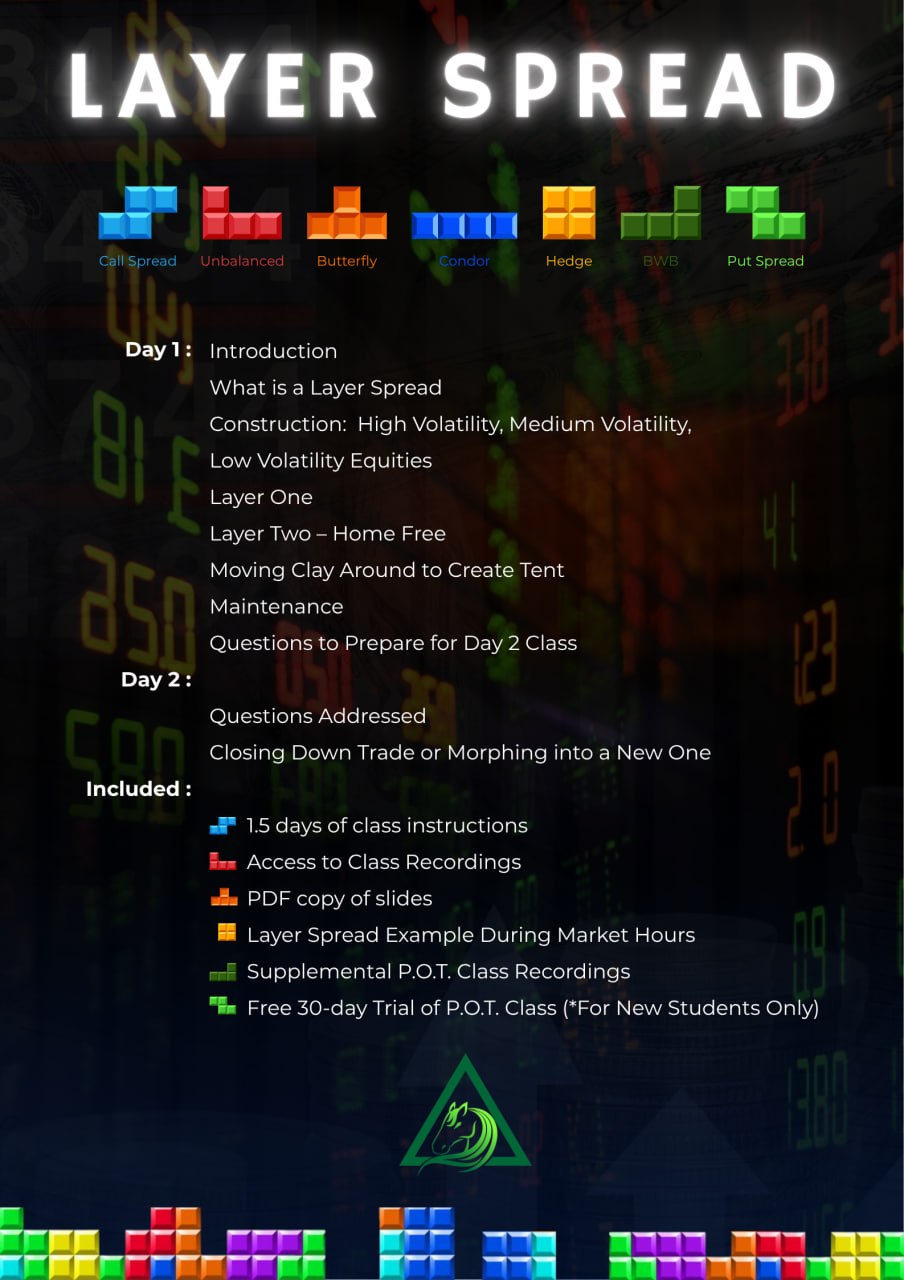
  • 1.5 days of class instructions
  • Access to Class Recordings
  • PDF copy of slides
  • Gamma Example During Market Hours
  • Supplemental P.O.T. Class Recordings
  • Free 30-day Trial of P.O.T. Class (*For New Students Only)


LEARN A NEW STRATEGY THAT MATCHES YOUR TRADING STYLE!

For more information, CLICK HERE.

Pair Trades
Take a Bite Out of Volatility


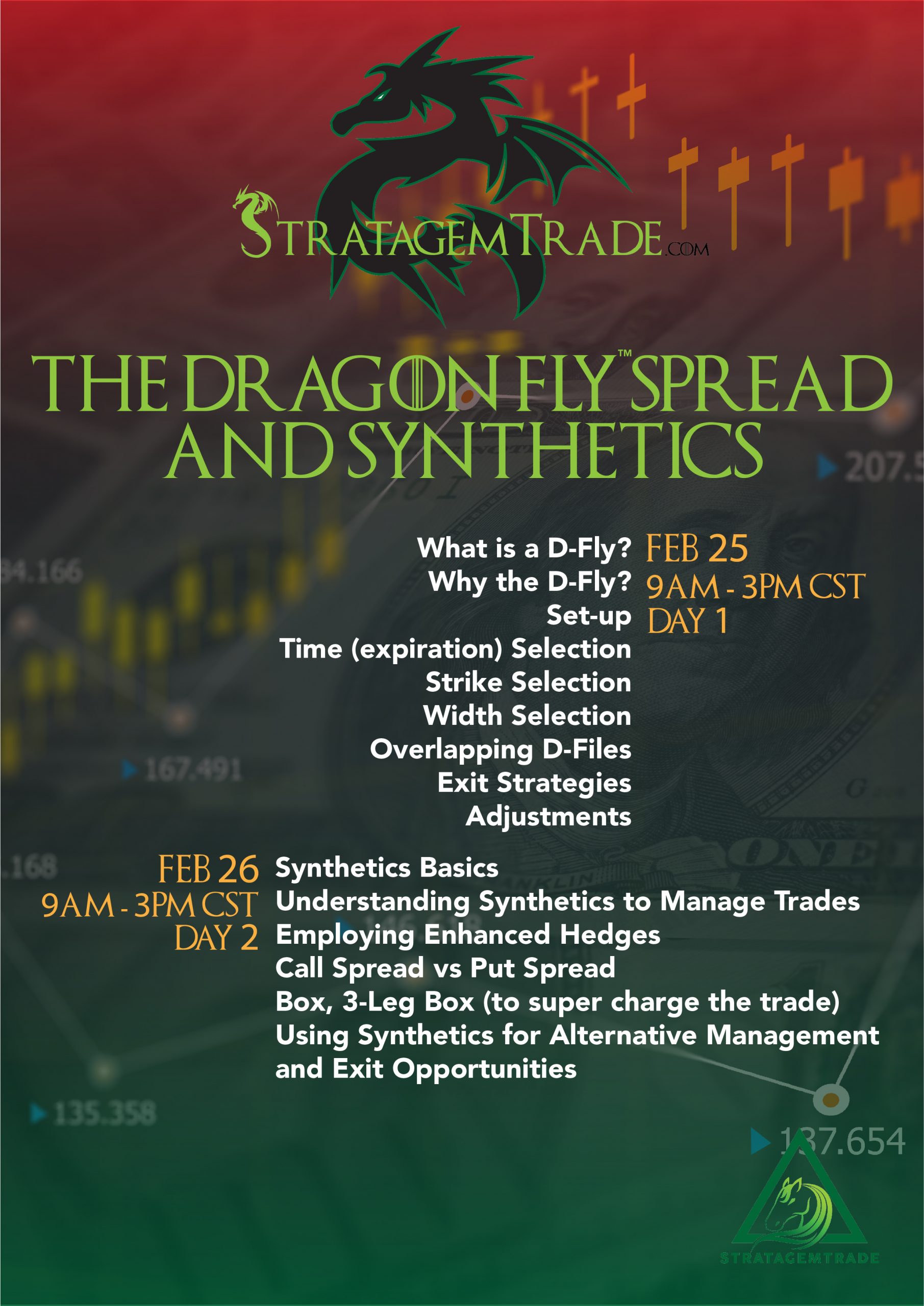
Dragon Fly Spread and Synthetics
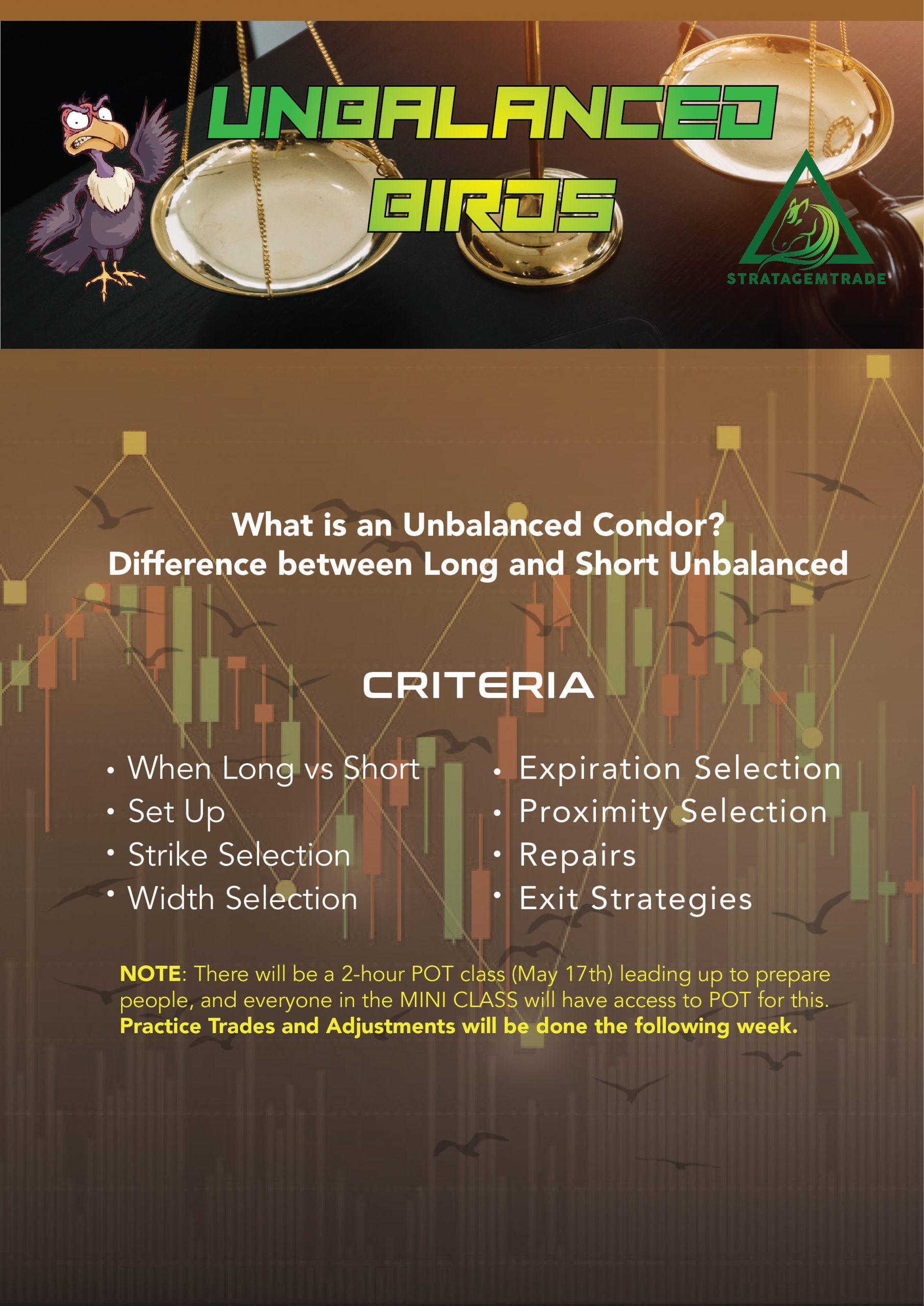
Unbalanced Birds
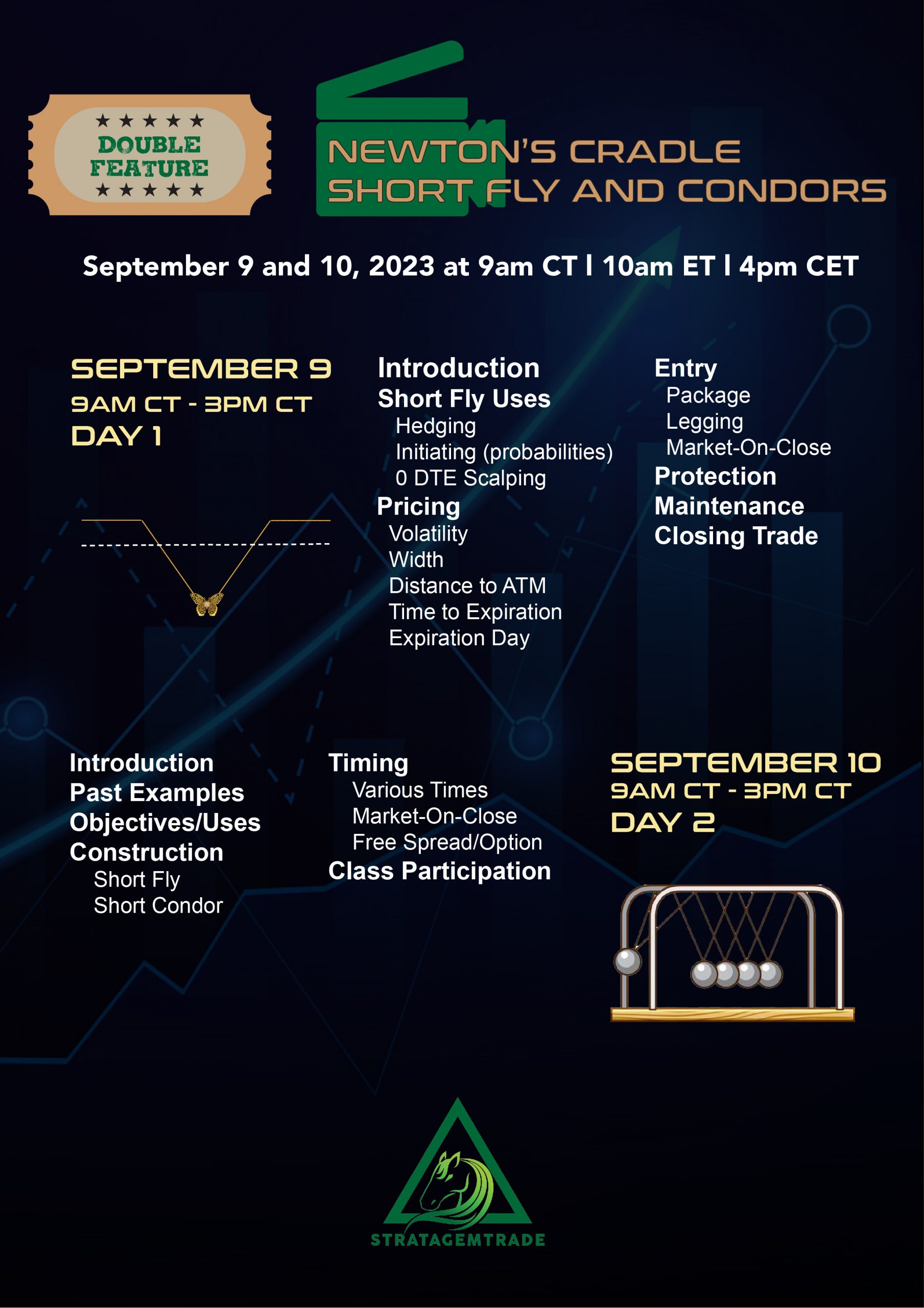
Newton's Cradle and Short Fly
Everything Collars